
“Hall Monitor”
The Problem
Modern parking garages are engineered for structural efficiency, often at the expense of driver safety.
Why it Matters
Parking garages are full of blind corners and ramp intersections where drivers can't see cross-traffic until they're already in it, and convex mirrors are little help when sunlight and headlights blur together. With roughly 50,000 collisions a year in U.S. lots and garages (National Safety Council) and even low-speed impacts costing $1,500–$3,000 to repair (IIHS), there's room for a better warning than a mirror.
Parking lot/garage accident stats — National Safety Council (primary source): https://www.nsc.org/road/safety-topics/distracted-driving/parking-lot-safety
Low-speed crash repair cost — IIHS via Autoblog's writeup of the study ($850–$6,015 at 10 mph): https://www.autoblog.com/features/iihs-bumper-crash-test-study-mismatched
The Solution
Hall Monitor closes that gap. Using radar-based object detection paired with a flashing warning light, it alerts drivers to approaching vehicles well before they round the corner.
V1
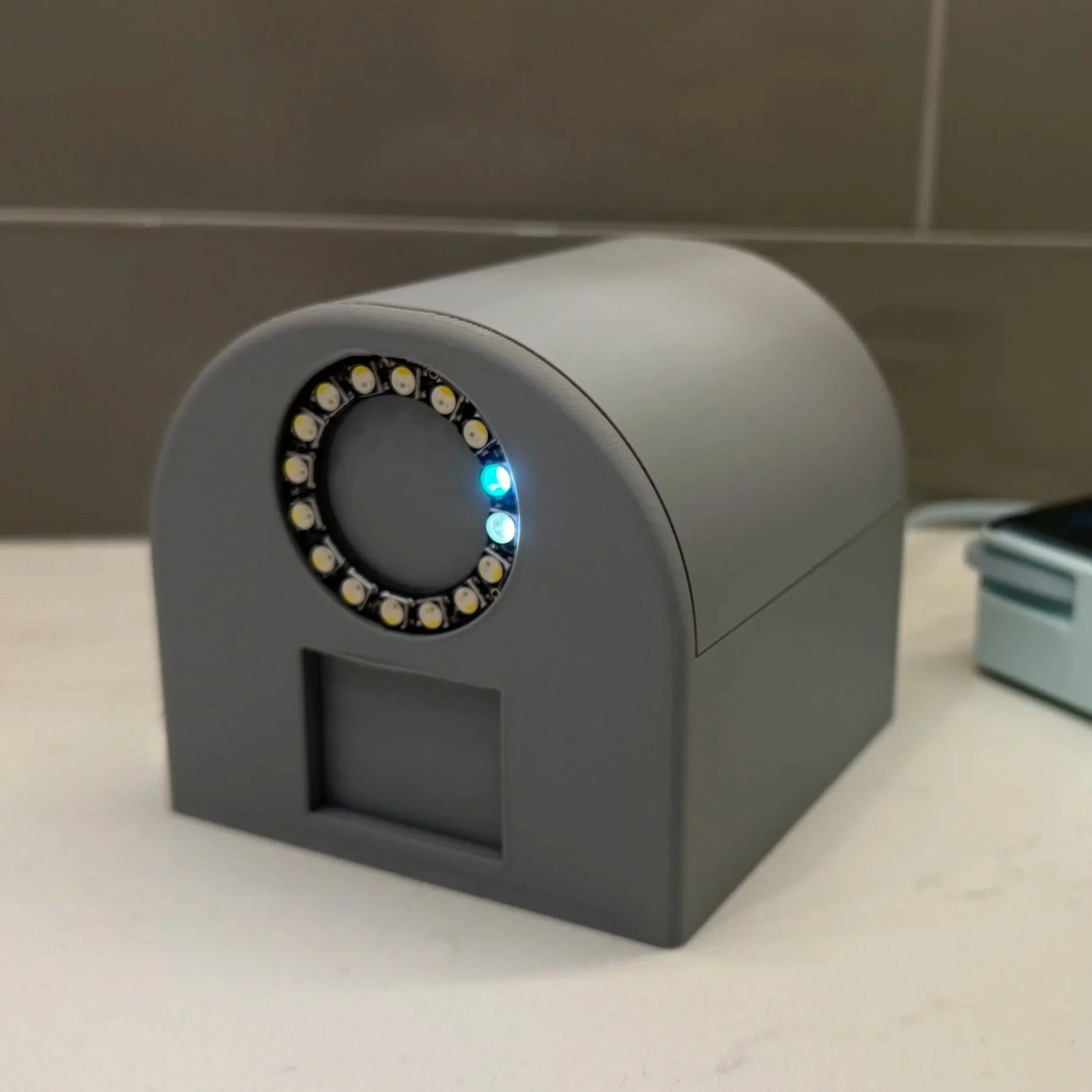
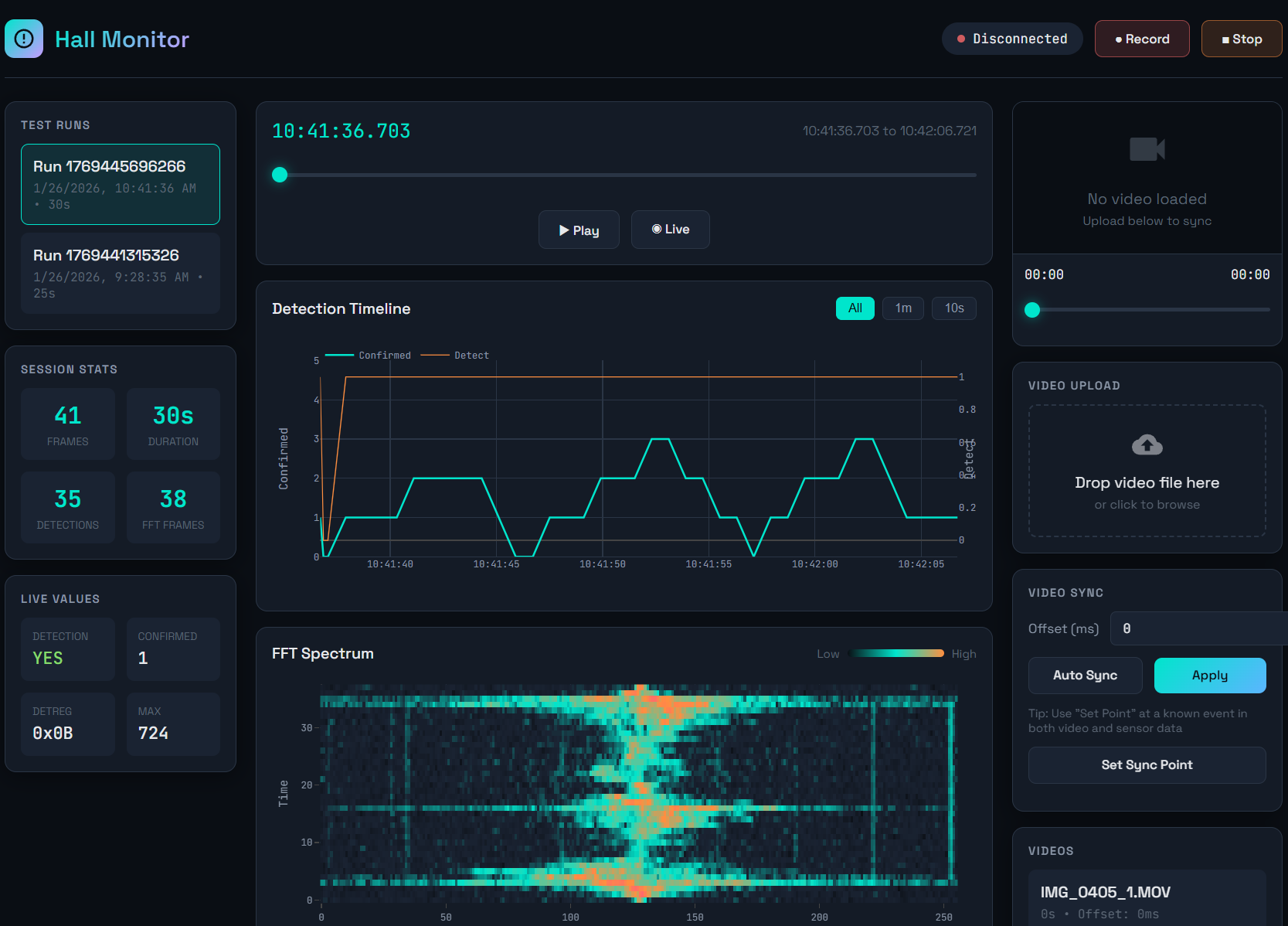
System Components:
Housing: custom 3-D printed housing integrating the microcontroller, power-delivery board, K-LD2 radar module, and LED ring
Sensor: K-LD2 continuous-wave radar
Test stand: tabletop rig
Telemetry software: capture test data based on radar velocity signatures and synced cell phone video
Requirements:
The system shall detect and notify the driver of a potential collision within 0.5 seconds (derived from radar detection range, maximum driver speed, and average driver reaction time).
The prototype housing shall enclose and secure all electronic components.
The prototype housing shall be transparent to radar.
The radar shall detect multiple approaching objects across a minimum 80° field of view.
The system shall wirelessly transmit test data to a laptop.
Next Steps:
Handle additional edge cases (e.g., vehicles rounding a corner registering as multiple objects)
More representative test placement and angle
Faster, more stable data syncing to the laptop
V2
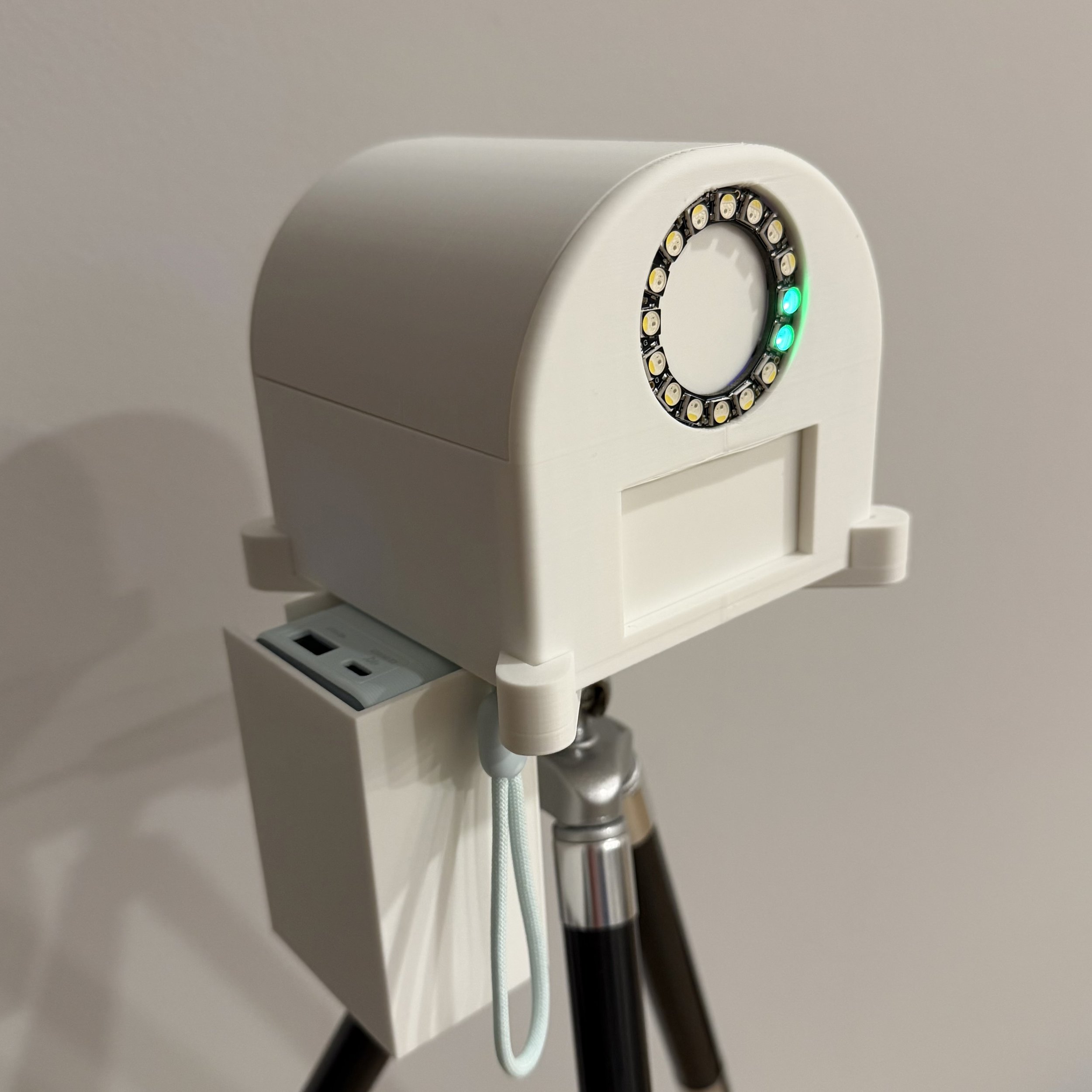
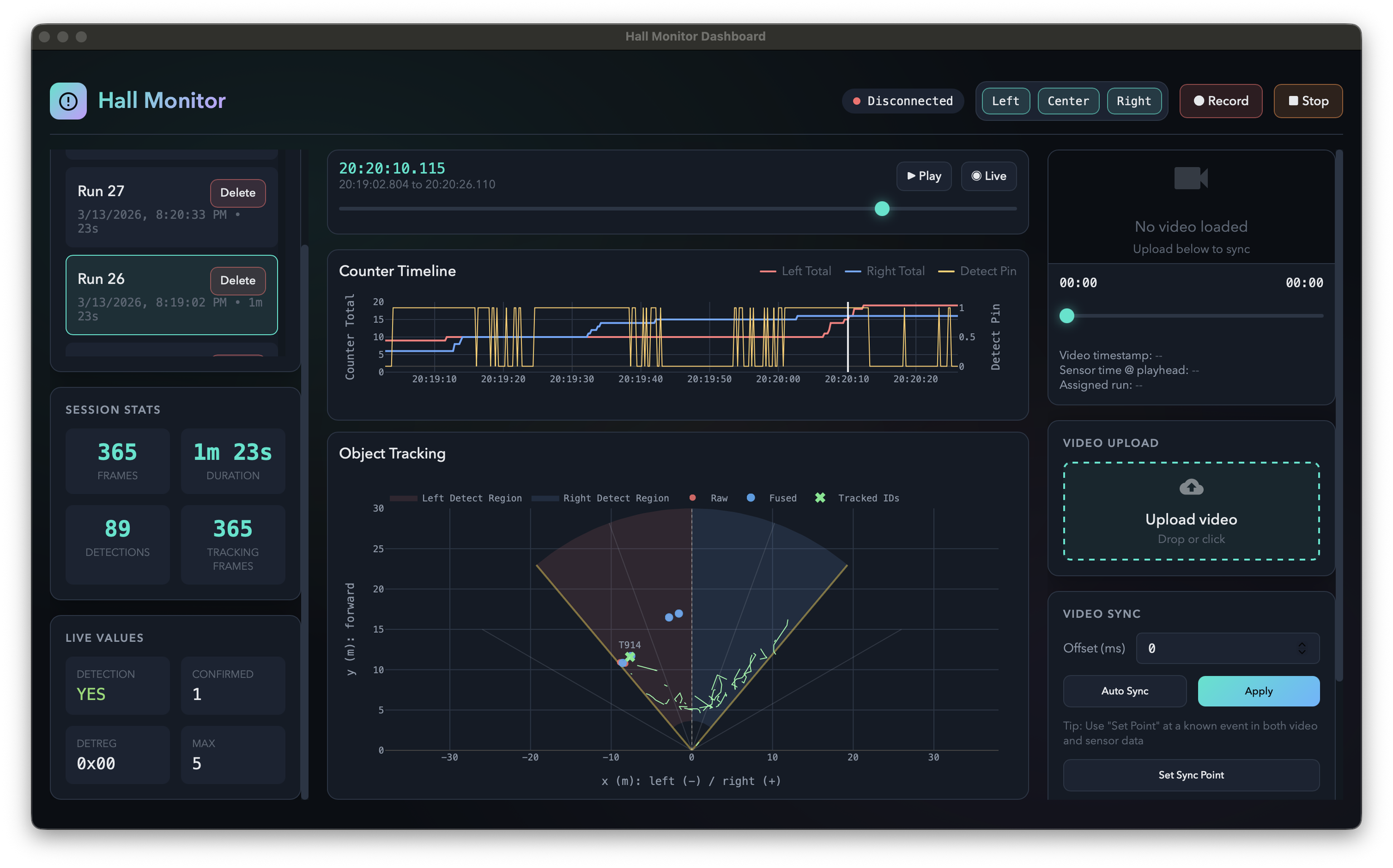
System Components:
Housing: updated housing integrating the microcontroller, power-delivery board, K-LD7 radar module, and LED ring
Sensor: K-LD7 variable-frequency continuous-wave radar
Test stand: adjustable camera tripod
Telemetry software: capture test data with live object tracking in an xy-plane and synced cell phone video
Enhanced Requirements:
The radar shall distinguish between objects approaching from the left and right.
The radar shall filter objects by distance from the sensor to prevent double-counting of nearby objects.
The test stand shall replicate the final mounting placement and allow the mounting angle to be adjusted.
The radar shall be aligned to within ±3° of the horizontal mounting position using a laser.
Next Steps:
Halve total unit cost relative to the V2 baseline
Injection-moldable housing with a waterproof and dust (IP) rating
Mounting bracket validated with FEA to prevent misalignment from minor impacts
Damping system to isolate the radar from parking-garage vibrations that could distort readings